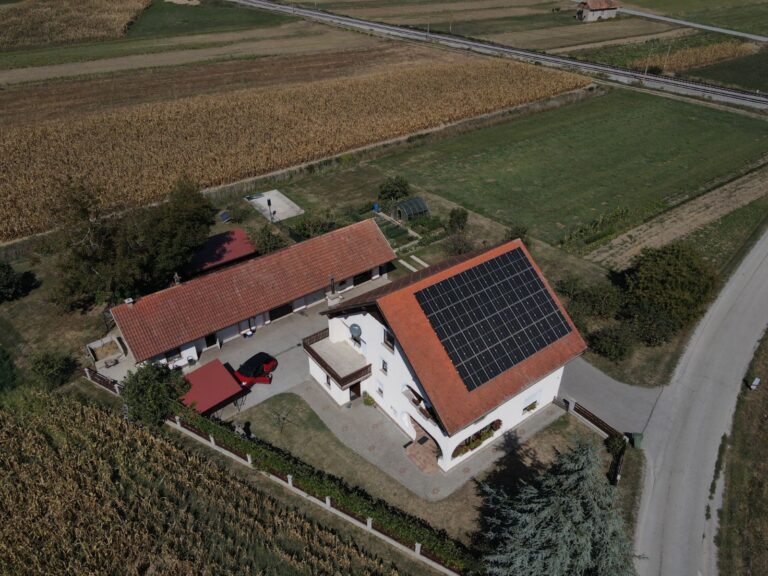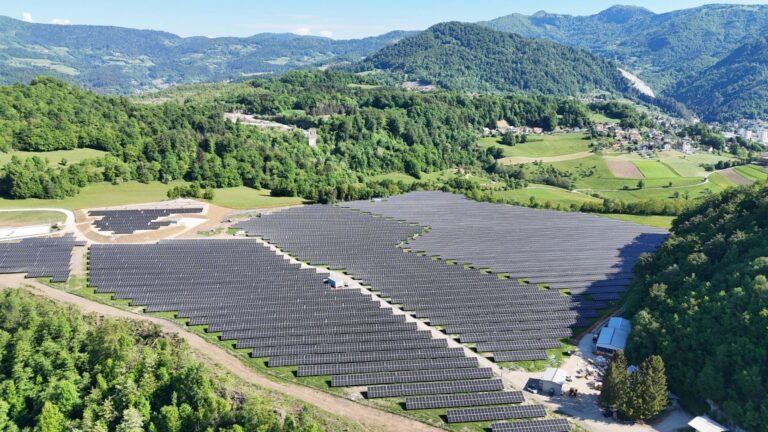

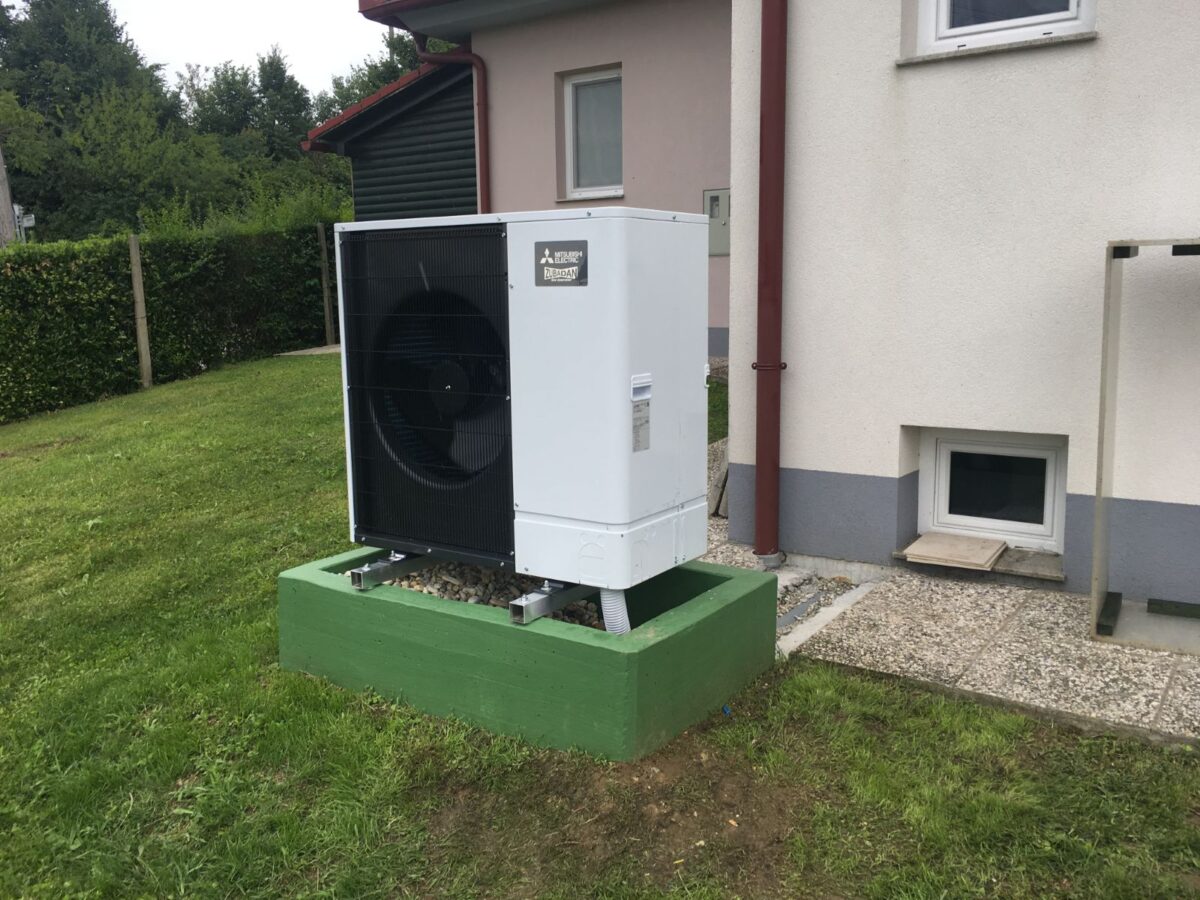
A heat pump is the most efficient way to heat a home, but it increases electricity consumption. A solar power plant generates cheap electricity, but most of it when heating demand is lowest. It sounds like a bad match, but the opposite is true: with correct sizing, smart control and (where needed) a storage system, a solar power plant and a heat pump are today the strongest combination for the energy independence of a Slovenian home. Let us look at why and how.
Why do the technologies complement each other?
1. A heat pump turns 1 kWh of electricity into 3–4 kWh of heat
Modern air-to-water heat pumps achieve seasonal performance factors (SCOP or SPF) of around 3–4, and geothermal ones even more. So every kilowatt-hour of solar electricity used by the heat pump replaces 3–4 kWh of heat from heating oil, gas or electricity in conventional heaters.
2. The transitional seasons and hot water preparation: this is where most of the synergy comes from
In winter, a solar power plant really does cover only part of the heating demand. But the heating season is not just January: in March, April, October and November, the power plant easily runs the heat pump on sunny days, and it covers domestic hot water almost entirely from spring to autumn. Over the year, this means a significant part of the heat actually comes from the roof.
3. Smart control: the heat pump as a »thermal battery«
The controller (an SG-Ready interface or an EMS) starts the heat pump when the power plant is generating surpluses: it raises the temperature of the buffer tank or domestic water by a few degrees and »stores« the heat in the water and the building. The building becomes a storage system without a battery.
4. Time blocks: working together lowers network charges
A heat pump is one of the larger loads in a household. If the EMS runs it on your own generation or in cheaper blocks while smoothing the peaks (with the help of a battery storage system where needed), the contracted billed capacity stays lower, which directly lowers the bill under the new network-charge billing.
How much can you save? (An illustrative calculation)
Assumptions: a newer single-family house, an annual heat demand of 12,000 kWh and 3,500 kWh for domestic water; a heat pump with an SPF of 3.5, i.e. a total approximate annual electricity consumption for heat of ~4,400 kWh; total household consumption including heating ~8,500 kWh; a 10 kW solar power plant (generation ~10,500 kWh/year); a 10 kWh storage system; prices: electricity EUR 0.16–0.20/kWh, heating oil ~EUR 1.1/l.
- Switching from oil to a heat pump: the heating cost falls from around EUR 1,600–1,800/year (oil) to EUR 700–880 of electricity — a saving of EUR 800–1,000/year even before the solar power plant.
- Solar power plant + storage system: with 60–75% of total consumption covered by your own generation, the annual electricity cost falls by approximately a further EUR 800–1,200.
- In total: a typical household heated with oil can cut its annual energy costs by EUR 1,500–2,000+; with subsidies, the investment typically pays back in 6–9 years. (All amounts are indicative and depend on the building, habits and energy prices; they are not guaranteed.)
Subsidies: two separate routes you can combine
- Heat pump — Eko sklad: under the public call for citizens (in 2026, call 126SUB-OB26), a subsidy of up to 50% of the recognised costs when replacing an old heating unit (maximum amounts depend on the type of heat pump; up to 20% for a first installation without replacement). Under the current call, the application is submitted via eUprava for an investment already completed.
- Solar power plant + storage system — Borzen: for private individuals under the new self-supply scheme, EUR 675/kW with a battery storage system or EUR 250/kW without one (up to 40% of the eligible costs).
- The subsidies are not mutually exclusive — one investment goes to Eko sklad, the other to Borzen. Watch the correct order and the supporting evidence; we handle both applications for you.
How do you size the combination correctly?
- First the building and the heat: heat losses, the heating system (low-temperature distribution increases the SPF), the required heat pump output.
- Then the power plant: we add the heat pump’s consumption (and that of any electric vehicle) to the existing consumption and size the power plant for the new total consumption, typically 1.2–1.5 kW of power plant capacity per 1,000 kWh of annual consumption.
- A storage system if needed: 1–2 kWh per kW of power plant capacity; it is not essential, but it raises self-sufficiency and helps with export limitations and time blocks.
- Control: the SG-Ready link between the inverter/EMS and the heat pump is the connecting element that turns two devices into a system.
Conclusion
A solar power plant and a heat pump each lower costs on their own, but together they change the way your home breathes: electricity from the roof in summer, efficient heat in winter, and smart control in between that uses every kilowatt-hour at the right time. At JB energija we design and deliver both as a single system, including both subsidy applications.
Book a free energy consultation for your home: +386 7 292 7028 or info@jb-energija.com.
Sources:
- Eko sklad — public call 126SUB-OB26 (April 2026; up to 50% when replacing an old heating unit, up to 20% for a first installation; investments from 1 March 2026; submission via eUprava) and closure of 114SUB-OB24 on 1 July 2026: https://ekosklad.si [check the call in force]; summaries: Žurnal24, https://www.zurnal24.si/pod-streho/gradimo-obnavljamo/eko-sklad-pohitite-cas-za-oddajo-vloge-za-subvencije-se-izteka-460084; Svet24, https://svet24.si/dom/gradnja-obnova/subvencije-ogrevanje-toplotna-crpalka-prezracevanje-2026-1918939
- Eko sklad — technical requirements for heat pumps (ηs under Regulation (EU) 813/2013, Smart Grid function): https://zer.ekosklad.si/uploads/cc32e372-aec8-4298-8eb9-d21ec8ec98c2/Javni-poziv-127SUB-SOG26.pdf
- Borzen — self-supply subsidies (EUR 675/250 per kW, up to 40%): https://borzen.si/Portals/0/Točka OVE/2.3. Subvencije za spodbujanje investicij v OVE_Gorana Pirkovič.pdf
- Act on the methodology for calculating network charges (time blocks, billed capacity): https://pisrs.si