Energy solutions for business users
A business solution is based on how electricity is consumed, not just on the size of the roof. For a company we check the consumption profile, the billed capacity, the space for a solar power plant, a possible storage system and the financing model. We then adapt the design to the sector and the way the business operates.
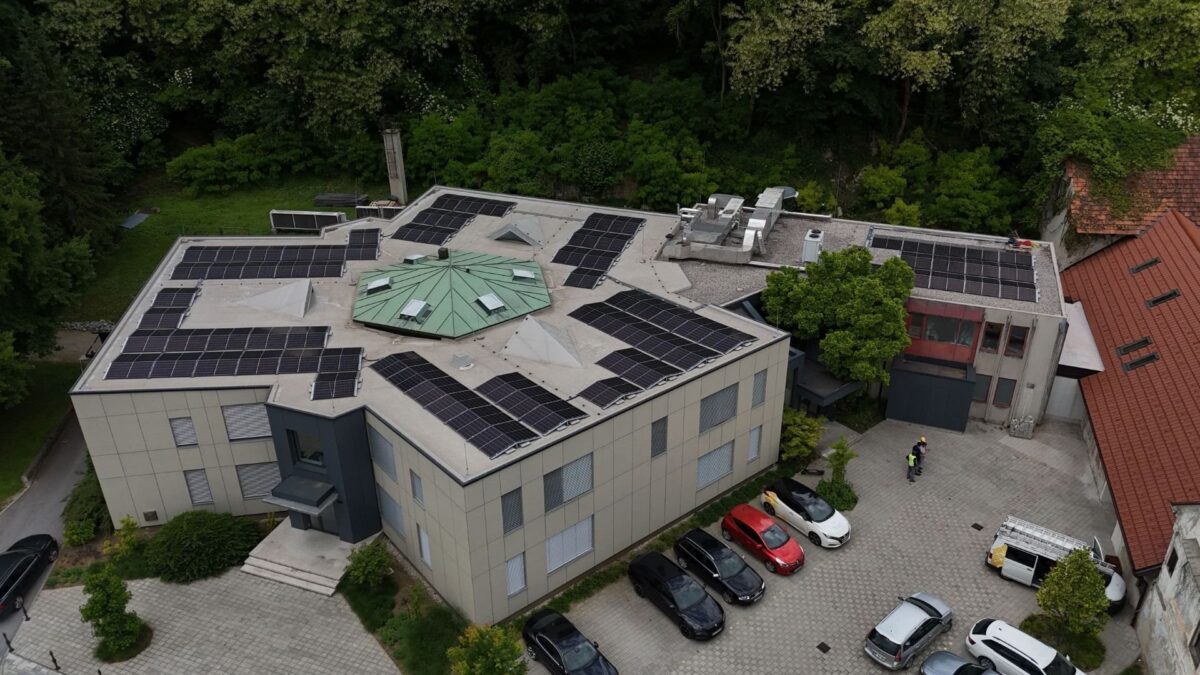
Solutions by segment
Industrial buildings
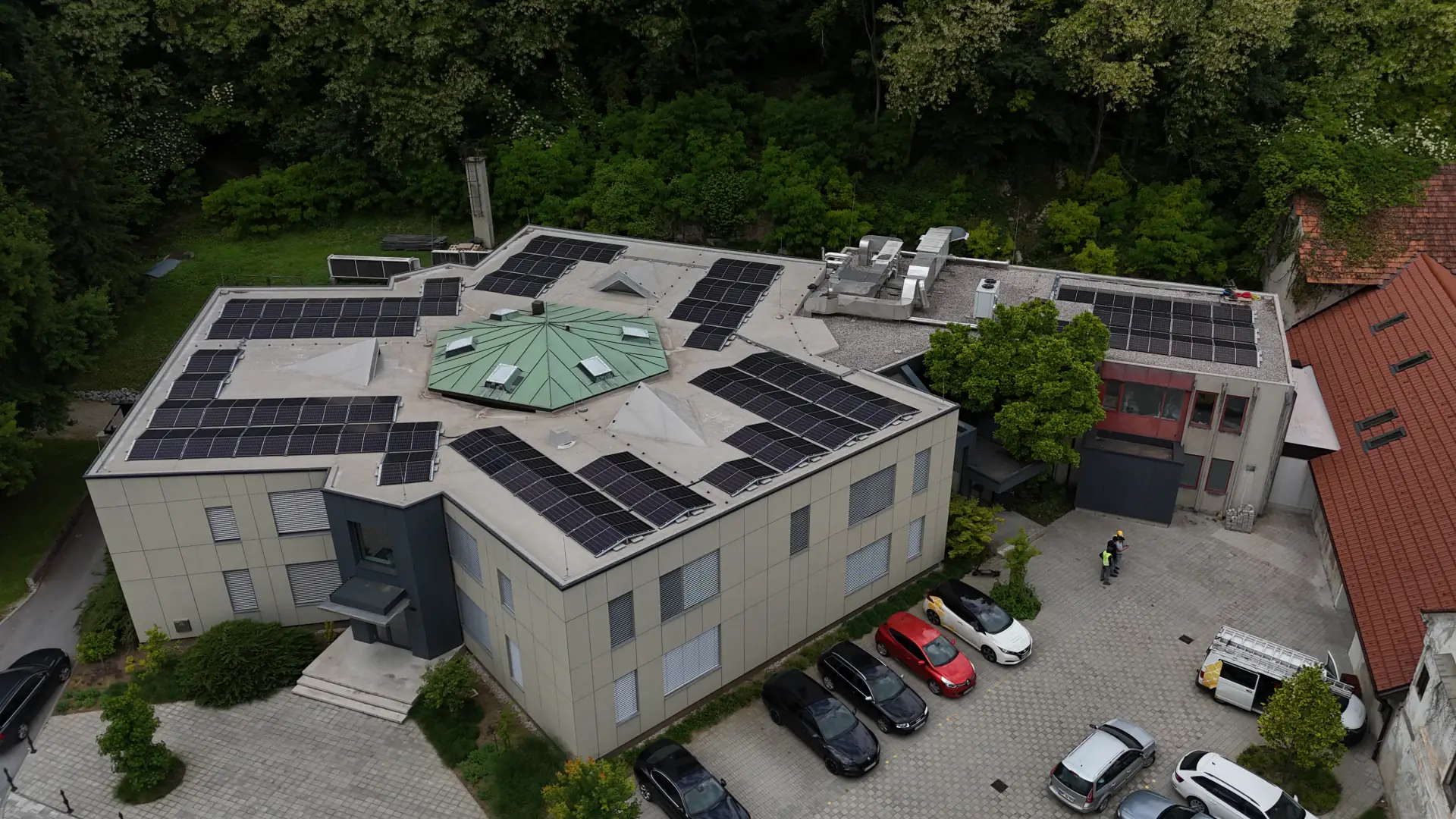
Large roof surfaces and high electricity consumption are the ideal combination for a solar power plant with a battery energy storage system, which balances peak loads, substantially reduces electricity and network-charge costs and ensures stable operations.
Office buildings
Predictable electricity costs and sustainability (ESG) reporting for your business.
Agricultural buildings and agrivoltaics
Solar power plants on barns, machinery sheds and agricultural land; we have also delivered a pilot agrivoltaics project in cooperation with the Agricultural Institute of Slovenia.
Warehouse and logistics buildings
We turn large flat roofs into a source of revenue and savings.
Tourism facilities
Lower operating costs and credible sustainability credentials for your guests and stakeholders.
Multi-apartment buildings
Community self-supply enables a fair distribution of the generated electrical energy among residents and community stakeholders.
Public sector and community self-supply
Municipalities, public institutions and energy communities: our references include individual community projects exceeding 2 MWp.
A design based on your company’s consumption
In industry, we also analyse peaks and the potential for a storage system; in logistics, the roof and vehicle charging; in tourism, the seasonal profile. The technical design includes the grid connection, safety requirements and the possibility of delivery while the building remains in normal operation. The economic calculation is based on actual data and clearly stated assumptions.
Why does this approach make sense?
Data before equipment
The consumption profile over time shows how much of the generation the company can use directly.
Different business models
The investment can be treated as a direct purchase, or the option of energy contracting can be considered.
Support after commissioning
Monitoring and maintenance are important for systems that affect business operations.
Consumption determines the design
For a commercial building, we compare the 15-minute consumption with the expected generation. Two companies with the same annual consumption may need a different design because they use energy at different times.
15-minute profile
We compare consumption with the expected generation, not only with annual consumption.
Billed capacity
We check the connection and billed capacity and the timing of peaks.
Operating rhythm
We adapt the design to the sector, working hours and operating cycles.
Technical and financial scenarios
We compare a power plant, a storage system and the PPA option with clearly stated assumptions.
From consumption analysis to support
Consumption analysis
We review the data on consumption, connection capacity and operating rhythm.
Site visit and design
We inspect the building and compare the options of a solar power plant, a storage system and a PPA.
Turnkey delivery
Once agreed, we arrange the design, permits, installation, commissioning and support.
Verifiable references
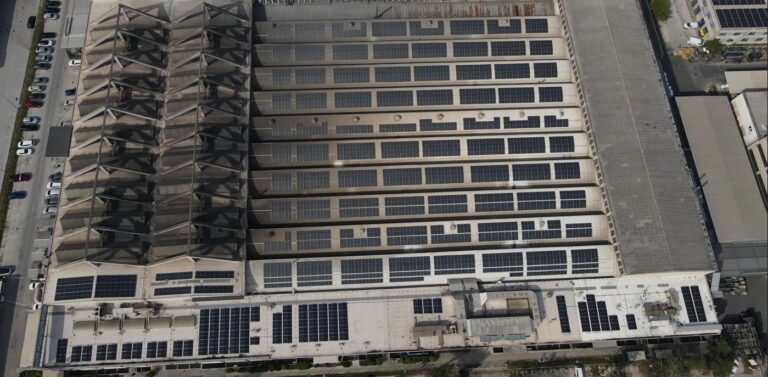
- 877,38 kWp
- Solar power plant on an industrial building
mFE LTH Castings
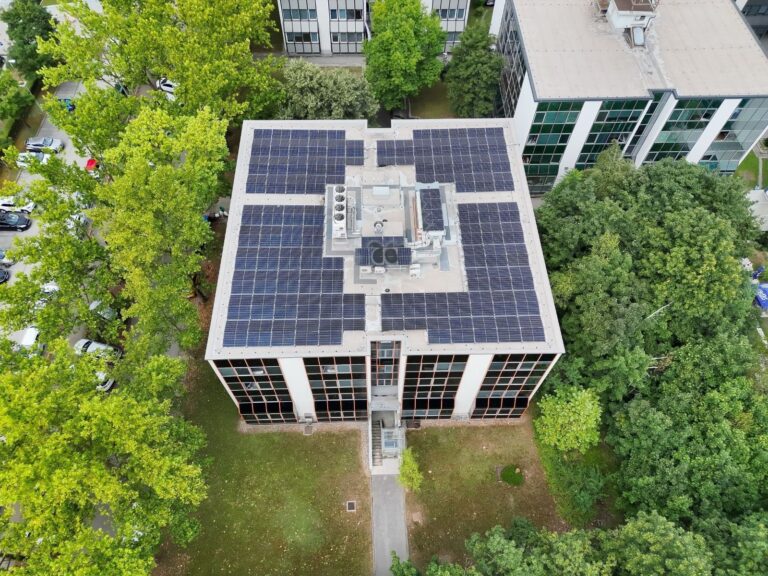
- 83,42 kWp
- Solar power plant on a commercial building
mFE Brius Ljubljana
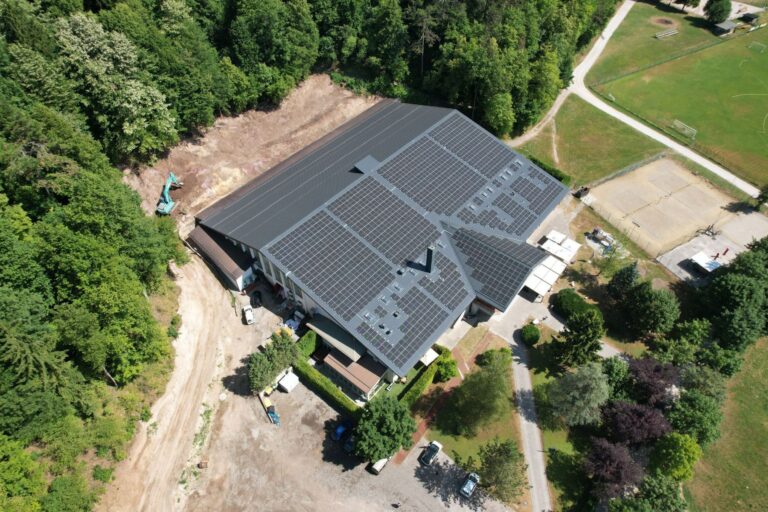
- 389,40 kWp
- Solar power plant on a tourism facility
mFE Hotel Harmonija
An energy solution for your business
Together we review your consumption, the technical options and your plans, and set the starting points for an individual design.
Answers to frequently asked questions
Is a PPA suitable for every company?
No. Suitability depends on the building, consumption, contract term and the project economics. After an initial analysis, we compare a PPA with a direct investment.
Does the company have to stop work during installation?
We adapt the schedule to your operations, but the extent of any interruptions depends on the building and the electrical connection. We determine this after the site visit.
What data do you need for an assessment?
The starting point is your electricity bills, the consumption profile, data on the roof or land, and the grid connection conditions.