Electricity prices in recent years have shown companies how expensive it is to be entirely dependent on the market. A PPA (Power Purchase Agreement, a long-term electricity purchase agreement) is a model that sets the price of electricity at a predictable level for 10 to 20 years, and in its on-site form gives a company its own rooftop solar power plant without an upfront investment. Let us look at how the contract works, what forms exist and what to watch out for.
What is a PPA?
A PPA is a long-term contract between an electricity producer (or the investor in the generating facility) and a customer, in which the price and quantity of the electricity supplied are agreed in advance. In Slovenia, the legal basis comes from ZOEE and ZSROVE, which explicitly provide for energy contracting and long-term agreements to purchase energy from RES.
Three forms of PPA — which is right for your company?
1. On-site PPA (a power plant on your roof)
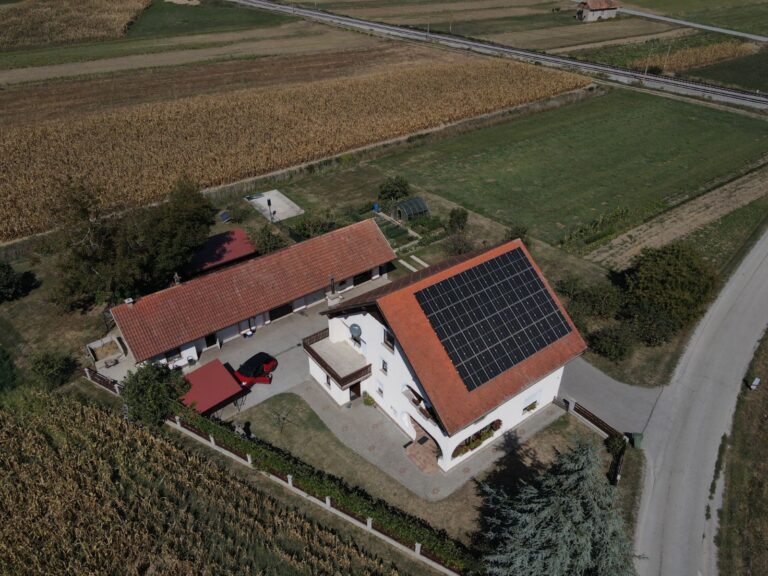
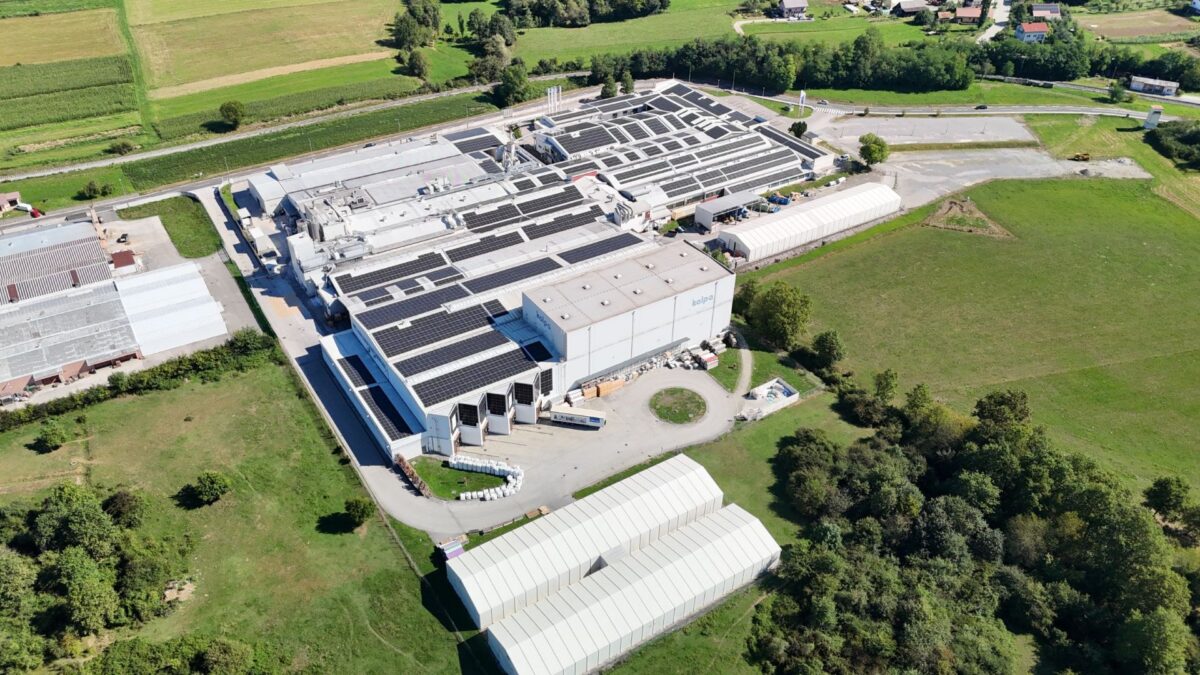
An investor such as JB energija installs, insures and maintains a solar power plant on the roof of your building at its own expense. You buy the electrical energy generated on your roof at a pre-agreed price, generally below the market price. When the contract expires (usually after 15–25 years), the power plant often passes into your ownership.
The advantages are that the customer does not need to provide start-up capital, yet gets a lower and predictable price per kWh, with no maintenance worries, and the electricity is used where it is generated (it does not depend on network charges for long-distance transmission).
2. Off-site PPA with physical delivery
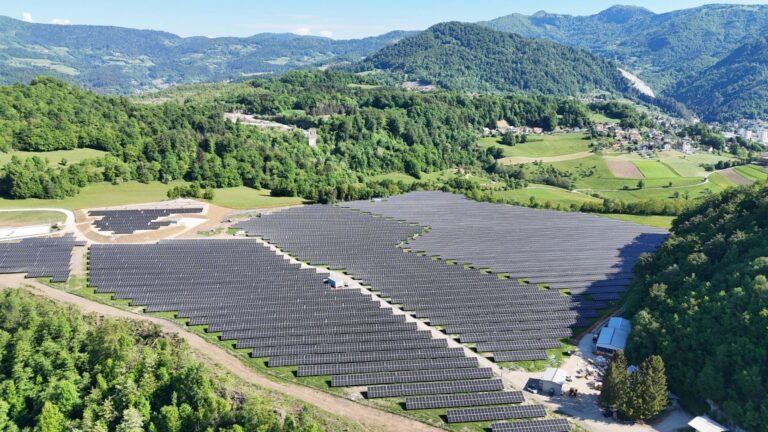
The power plant is located elsewhere (e.g. a larger ground-mounted solar power plant), and the energy is delivered to you through the grid, usually in cooperation with a supplier that takes on balancing responsibility.
3. Financial (virtual) PPA
Physical delivery remains with your supplier, and you conclude a financial fixed-price arrangement with the producer (a contract for difference). It suits larger customers who want price hedging and green credentials without changing their existing supply.
When does a PPA pay off?
A PPA generally makes sense when a company has:
- steady daytime consumption (manufacturing, cold stores, logistics, retail), where a larger share of the generated energy is used on site;
- a large, structurally suitable roof or land next to the building;
- decarbonisation goals (ESG reporting, supply-chain customer requirements, CBAM pressures), where a PPA provides a traceable green origin through guarantees of origin;
- a limited investment budget or priorities elsewhere, since the investment is financed by the investor.
Illustrative example: a manufacturing company with an annual consumption of 1.2 GWh and a roof suitable for an 800 kW power plant. The power plant generates around 880 MWh a year (an estimate of 1,100 kWh/kWp for a well-oriented roof in Slovenia), of which the company, with its daytime consumption profile, uses 70–85% directly. If the PPA price is 15–25% lower than the expected market supply price, the annual saving amounts to tens of thousands of euros, without a single euro of its own investment, without financial risk and without any obligation for regular maintenance.
What to watch out for in the contract?
- Price and indexation: a fixed price, fixed with annual escalation or linked to an index; each model allocates risk differently.
- Term and exit clauses: what happens if the property is sold, the business ceases or the company is restructured.
- Take-or-pay obligations: whether you pay for all the energy generated or only what you take off; where the surpluses go.
- Ownership after expiry: transfer of the power plant, purchase option, extension.
- Maintenance and availability: who is responsible for operation, what the guaranteed availability is, monitoring.
- Insurance and easement/building right: securing the right to use the roof for the term of the contract.
PPA or your own investment — a quick comparison
- Your own investment: a higher long-term return (all the energy generated is »yours«), Borzen subsidies for legal entities, but it requires capital and taking on the risks.
- PPA: no capital and no operating risks, immediate savings, but part of the value stays with the investor.
Conclusion
A PPA gives a company what the market does not offer: a long-term, predictable price for green electrical energy without an upfront investment. At JB energija we deliver on-site models end to end, from the consumption analysis and roof structure check through financing to the operation and maintenance of the power plant for the entire contract term.
A consultation on the PPA model for your building: send us your annual consumption and a roof plan at info@jb-energija.com or call +386 7 292 7028, and we will prepare an indicative calculation with no obligation.
Sources:
- ZOEE (Official Gazette of the RS No. 172/21) and ZSROVE (Official Gazette of the RS No. 121/21) — the legal framework for supply, contracting and guarantees of origin: https://pisrs.si
- Borzen — guarantees of origin: https://borzen.si