In recent years, thousands of Slovenian households and businesses have had their grid connection approval refused. The good news is that a refusal generally does not mean you cannot have a solar power plant; it only means the project needs to be adapted technically or legally. In this article we explain why the distribution system operator rejects applications, what your legal options are and which technical solutions most often lead to a connection in practice.
Why does the electricity distribution company refuse approval?
The grid connection approval is issued by the electricity distribution company responsible for your area (Elektro Ljubljana, Elektro Maribor, Elektro Celje, Elektro Gorenjska or Elektro Primorska), on the basis of the Slovenian Electricity Supply Act (ZOEE, Official Gazette of the Republic of Slovenia No. 172/21 et seq.) and the System Operating Instructions for the electricity distribution system (SONDSEE).
The most common reasons for refusal are technical:
- an overloaded low-voltage feeder — so many solar power plants are already connected to the same feeder that additional electricity export would cause excessive voltages;
- limited capacity of the transformer station to which your building is connected;
- long low-voltage feeders in more sparsely populated areas, where voltage conditions are already at the limit.
The scale of the problem is large: according to SODO data, in some years the distribution companies rejected approximately 18 to 25% of all applications for self-supply solar power plants, and some approvals were issued for a lower connection capacity than requested.
First step: check the decision and the deadline for an appeal
You receive the refusal in the form of a decision with reasons. Check:
- Are the reasons specific? The operator must justify the refusal with an analysis of the grid conditions, not just a general reference to a large number of applications.
- Was a lower capacity or an export limitation considered? It is often possible to issue an approval for a lower connection capacity or with limited export to the grid.
Technical solutions that enable a connection in practice
1. A solar power plant with limited export to the grid
The most common solution is to set the inverter so that it exports to the grid only as much electricity as the approval allows, if necessary even zero (so-called »zero export«). The power plant then covers the building’s own consumption, and surpluses are curtailed. The distribution companies themselves explicitly recommend that applicants submit applications »with a suitable storage system or in user-only mode, without export to the grid«.
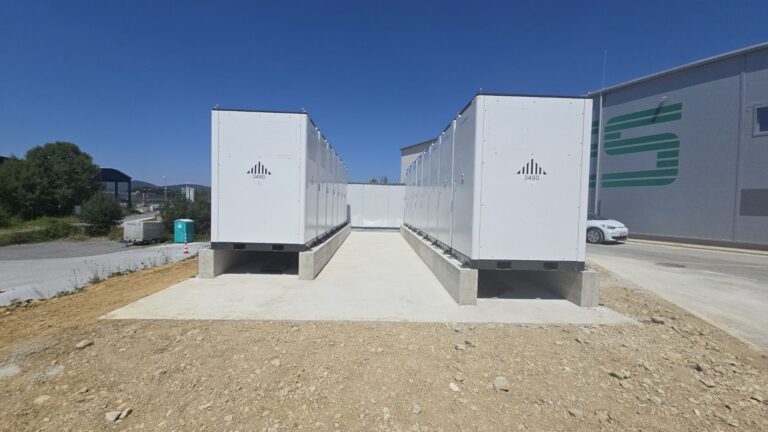
2. A hybrid system with a battery energy storage system
A battery energy storage system stores the surpluses of morning generation and releases them in the evening, when the sun is not shining. This raises a typical household’s degree of self-sufficiency from around 30% to around 70% (an estimate based on JB energija’s experience; the actual share depends on the consumption profile) and reduces the load on the grid, which makes such an application much easier to get through with the operator. Borzen also offers a higher subsidy for a combination of a solar power plant and a storage system (EUR 675/kW instead of EUR 250/kW; more in our blog post on subsidies).
3. Matching the power plant capacity to actual consumption
Instead of maximising the capacity across the whole available roof, the power plant is sized to the building’s actual consumption. A lower export capacity means less impact on the grid and a greater chance of a positive decision.
4. A new application after the grid has been reinforced
The distribution companies are gradually reinforcing the grid (new transformer stations, conductor replacements). The operator generally does not inform you of this itself, so it makes sense to check the situation from time to time and reapply. Note that an issued grid connection approval is valid for two years, after which it must be extended or a new one obtained.
5. Community self-supply
If your building is not suitable, you can generate electricity at another location (e.g. the roof of a nearby farm or commercial building) and share it among several metering points through community self-supply under the Slovenian Decree on self-supply of electricity from renewable sources (Official Gazette of the Republic of Slovenia No. 43/22 et seq.).
A real-life example
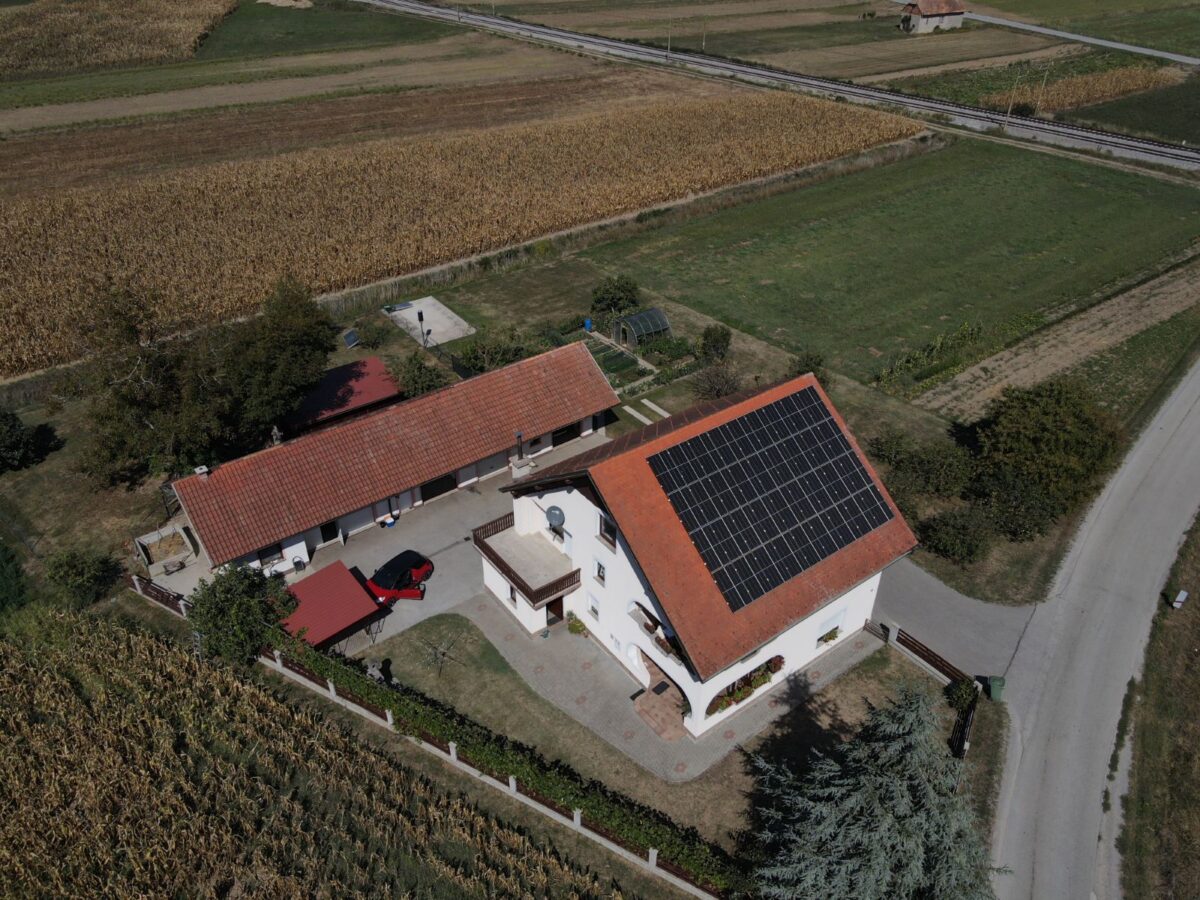
A household in Dolenjska wanted an 11 kW solar power plant, but the operator rejected the application because the feeder was overloaded. After a new application for an 8 kW power plant with a 10 kWh battery energy storage system and limited export, the approval was issued. Today the family covers about two thirds of its annual consumption from its own generation.
Conclusion: a refusal is a detour, not the end of the road
Almost every location has a workable route to its own solar power plant; the only question is which combination of capacity, export limitation and battery energy storage system is right. At JB energija we have delivered more than 2,100 projects since 2010 and know the procedures of all five distribution companies inside out: we review your decision, prepare an appeal or a new application and design a system the grid can handle.
Book a free energy consultation, call +386 7 292 7028 or write to info@jb-energija.com, and together we will check the options for your location.
Sources:
- ZOEE — Electricity Supply Act (Official Gazette of the RS No. 172/21): https://pisrs.si (PISRS)
- Decree on self-supply of electricity from RES (Official Gazette of the RS No. 43/22 et seq.): https://pisrs.si
- Energy Agency of the Republic of Slovenia — https://www.agen-rs.si
- Data on refusals and appeals (SODO, Agency): Žurnal24, »Številne odločbe o zavrnjenih soglasjih so zmotne in nepopolne« (2024), https://www.zurnal24.si/pod-streho/varcna-hisa/stevilne-odlocbe-o-zavrnjenih-soglasjih-za-prikljucitev-so-bile-zmotne-in-nepopolne-429692; »Zavrnejo že 30 odstotkov soglasij…«, https://www.zurnal24.si/pod-streho/varcna-hisa/zavrnejo-ze-30-odstotkov-soglasij-za-prikljucitev-kako-bodo-ukrepali-397117
- Distributors’ recommendation (storage / no export): Žurnal24, »Tako se lahko izognete zavrnitvi soglasja…«, https://www.zurnal24.si/pod-streho/varcna-hisa/tako-se-lahko-izognete-zavrnitvi-soglasja-za-soncno-elektrarno-404463