Your electricity available in the evening, at night and during a grid outage
A hybrid solar power plant combines PV modules, a hybrid inverter and a battery energy storage system. It stores the electricity produced and uses it when you need it, in more expensive time blocks or during a grid outage. Following the change in the billing of network charges, this is the new standard design for a solar power plant.
- Higher level of self-supply
- Backup power for key circuits
- Peak shaving and lower billing power
- Smart control by time blocks
What is a hybrid solar power plant and how does it work?
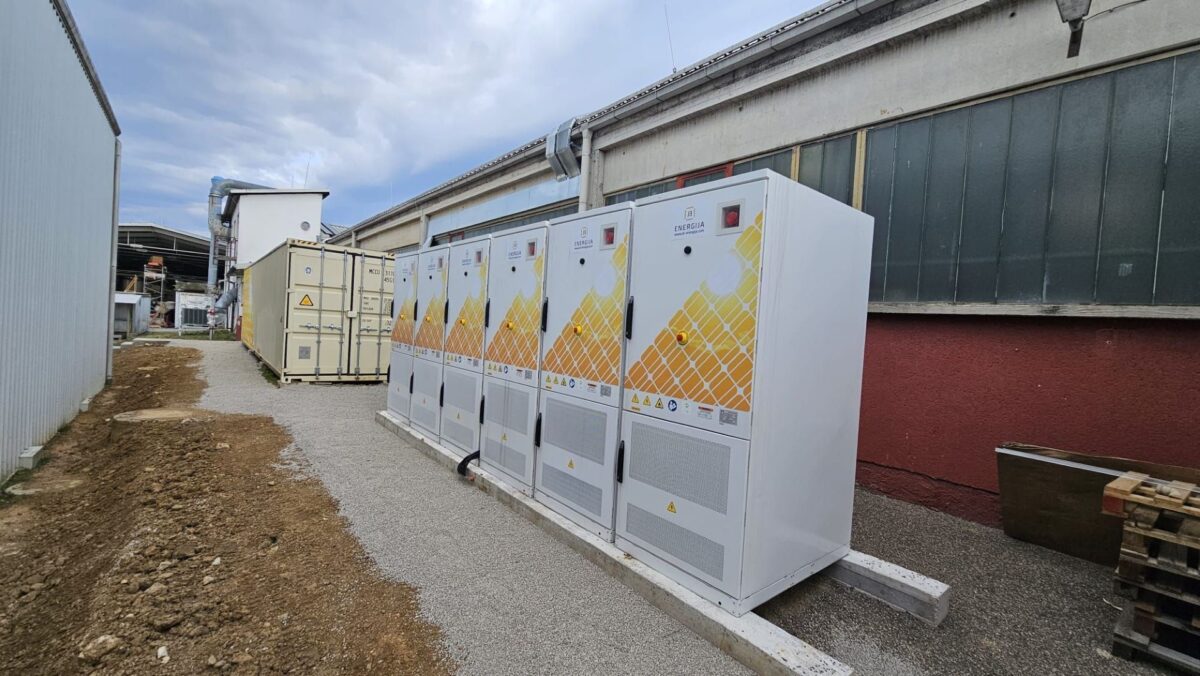
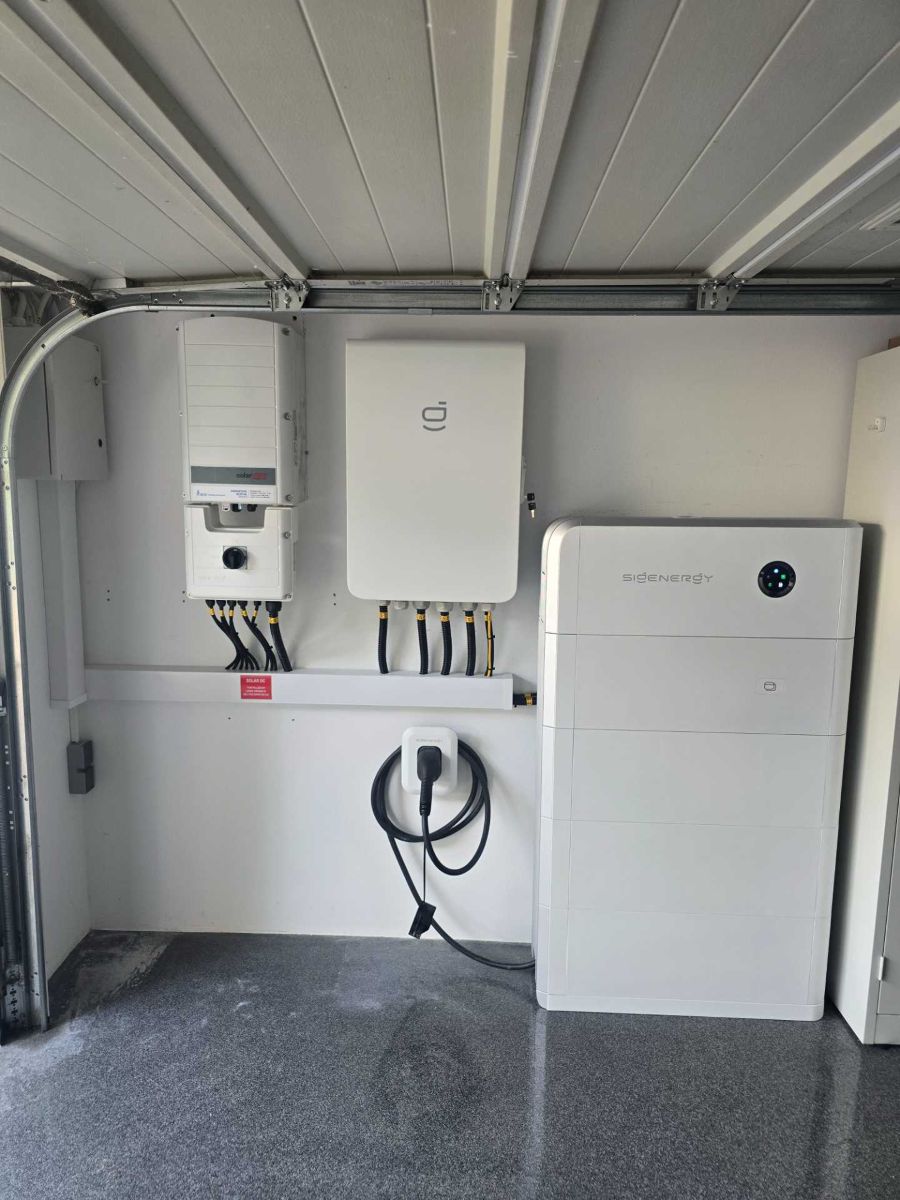
A hybrid solar power plant is a solar power plant with built-in storage: PV modules generate electricity, a hybrid inverter distributes it between consumers, the battery energy storage system and the grid, and smart control decides when the storage charges and when it discharges. A typical day goes as follows:
- In the morning, the solar power plant first covers the building’s consumption, and the surplus charges the storage.
- In the evening and at night, consumers run on stored electricity.
- When there is not enough production or stored energy, the system draws from the grid, preferably in cheaper time blocks, from which the storage can also be topped up.
- During a distribution grid outage, the system with backup power automatically takes over supplying the selected circuits.
Why has the hybrid design become the new standard?
End of annual net metering
Surplus electricity produced is no longer "stored" virtually in the grid on an annual basis, as under net metering. The storage keeps the surplus at home, where it has the greatest value.
Time blocks for network charges
Network charges are billed by time blocks with different prices and an agreed power; a hybrid system automatically shifts consumption to cheaper blocks and cuts peak loads.
Higher grants
Public calls explicitly reward hybrid systems. The difference often covers a large part of the storage price.
An active role in the grid of the future
A controlled hybrid system is ready for demand adjustment and the flexibility market, where stored electricity will create additional value.
Who benefits most from a hybrid solar power plant?
Family homes
Households with a heat pump, an electric vehicle or evening consumption, where storage typically raises the level of self-supply from about 30% to 70%, and bills become predictable.
Farms
Cooling, milking and ventilation require a reliable power supply; the storage provides backup power during outages and smooths out consumption peaks.
Businesses and industry
Peak shaving lowers billing power and network charges, while shifting consumption between time blocks reduces the cost of electricity supplied. We calculate the effect in advance using 15-minute data on your consumption.
Multi-apartment buildings and communities
Storage increases the share of self-generated electricity consumed collectively and the stability of supply to shared consumers.
Key benefits of a hybrid system
More of your own electricity
You consume a larger share of the electricity produced yourself, so purchases from the grid and the associated costs are lower.
Peak load shaving
The storage covers short-term peaks, which lowers the agreed or billing power and prevents penalties for exceeding it.
Backup power during an outage
During a distribution grid outage, selected circuits (refrigerator, heating, lighting, IT equipment) can keep running.
Control by time blocks
The system automatically charges and discharges the storage according to schedules and the prices of network charges and supplied electricity, without any action on your part.
Comparison of conventional and hybrid solar power plants
Conventional solar power plant (without storage)
- Surplus electricity produced is fed into the distribution grid at the buyback price.
- Evening and night consumption is drawn from the grid at the applicable tariffs and time blocks.
- The system does not work during a distribution grid outage.
- Peak loads weigh fully on the billing power.
Hybrid solar power plant (with a battery energy storage system)
- Surplus is stored and used when you need the electricity.
- Grid draw shifts to cheaper time blocks; the level of self-supply is significantly higher.
- During a grid outage, backup power keeps selected consumers running.
- The storage covers peak loads, so the billing power can be lower.
The hybrid system as a whole with other devices
The true value of a hybrid solar power plant shows when a heat pump, an EV charging station and consumption management work together: the heat pump heats when your own electricity is available, the electric vehicle charges from surplus, and the storage covers the evening and peak loads. At JB energija, we plan, install and control all these systems as a whole.
Hybrid solar power plant references
We build hybrid systems in all sizes. In 2025 alone, we installed 2,970 kWh of battery energy storage systems:
In total, we have installed 30,170 kWh of battery energy storage systems.
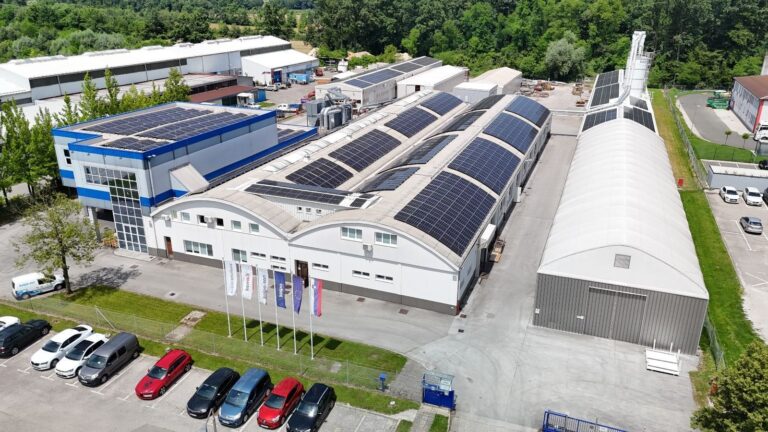
- 1.800 kWp
- 1.566 kWh
- Hybrid solar power plant on an industrial building
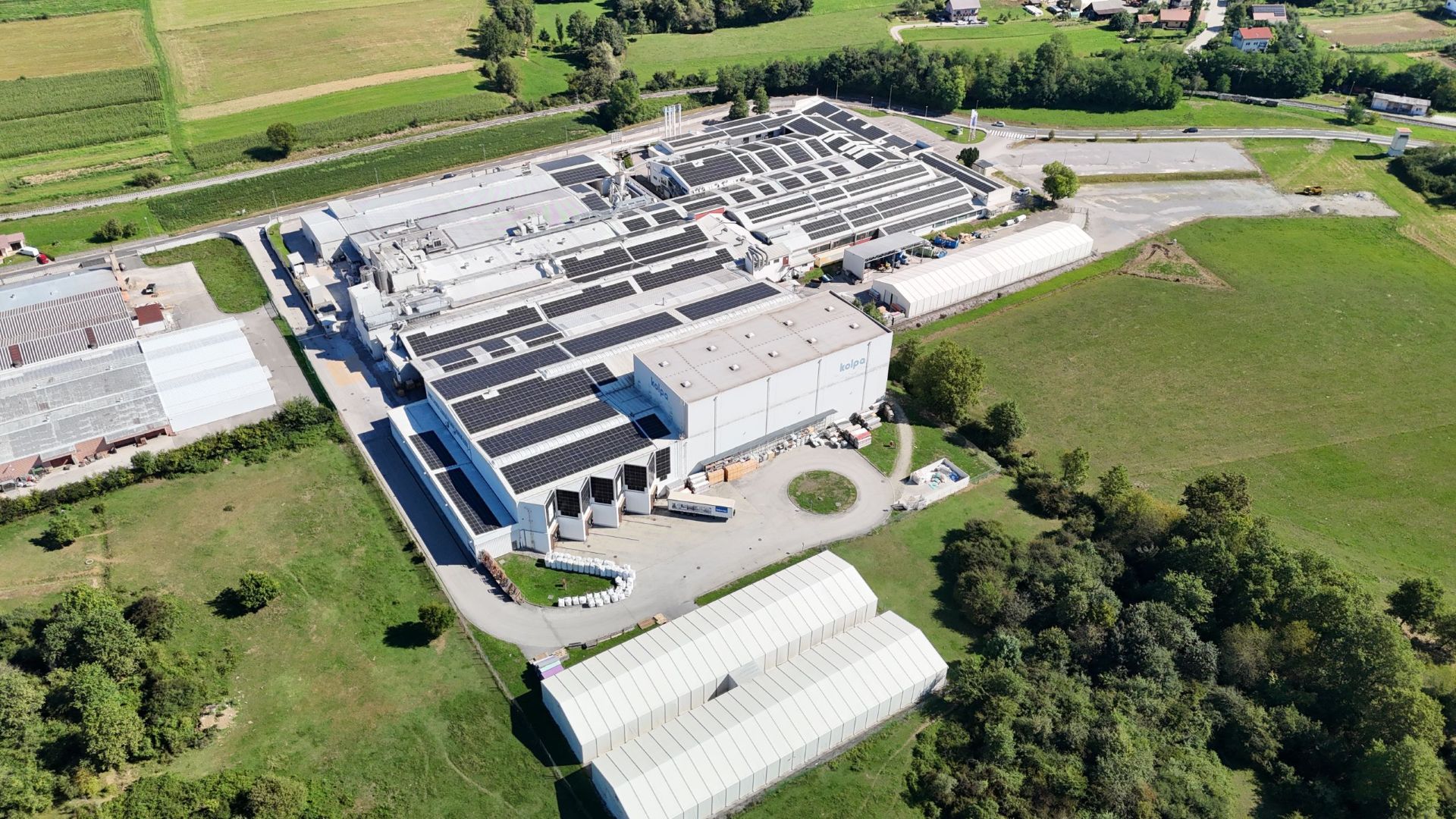
mFE Kolpa Rosalnice 1+2
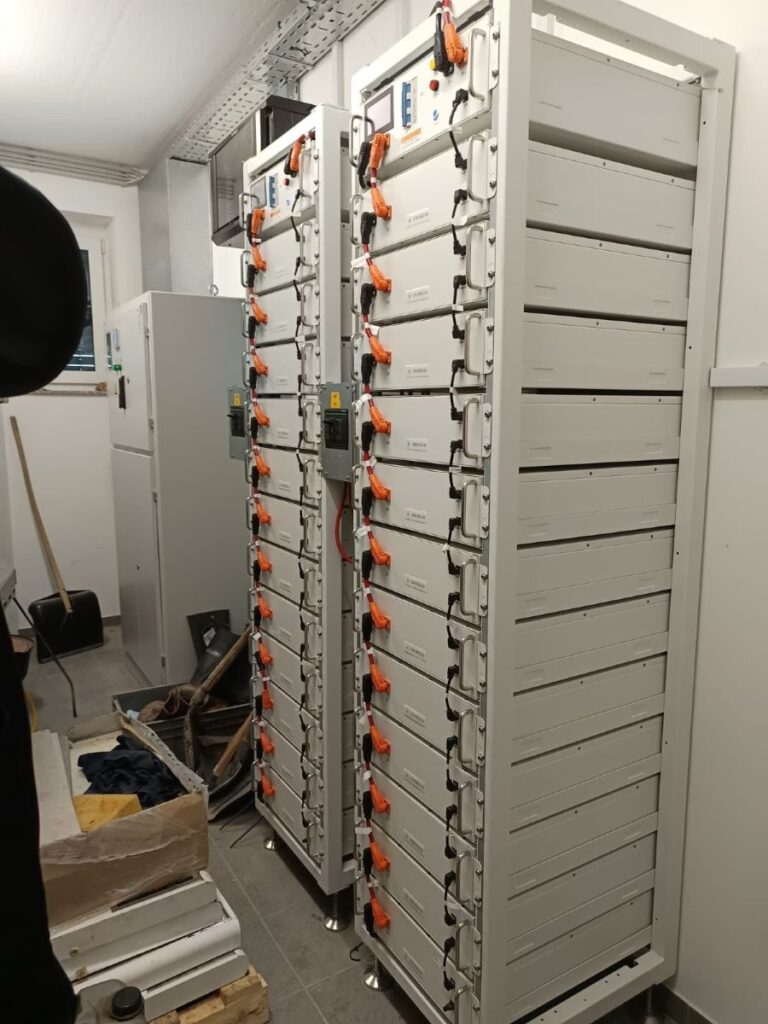
- 684,25 kWp
- 737,28 kWh
- Solar power plant on an industrial building
mFE Kolpa Kostanjevica
- 190,96 kWp
- 122,80 kWh
- Hybrid solar power plant
mFE Orodja Prebil
Answers to frequently asked questions
How does a hybrid solar power plant differ from a conventional one?
A conventional solar power plant feeds surplus electricity into the grid, whereas a hybrid one stores it in a battery energy storage system and uses it when there is no production. The difference lies in the hybrid inverter, the storage and smart control, as well as a significantly higher level of self-supply.
Which consumers work during a grid outage?
Those that we define together at the design stage and connect to the backup-powered circuit: usually the refrigerator and freezer, heating, lighting and IT equipment. How long the supply lasts depends on the storage capacity, the island-mode capability and the consumption of these devices.
How large a storage system do I need?
We determine the capacity from the consumption profile and the capacity of the solar power plant; we choose the solution with the best ratio between investment and savings.
Can I also charge the storage from the grid?
Yes. The control enables charging in cheaper time blocks and discharging in more expensive ones, which brings savings even in the winter months with less sun.
How does a hybrid system reduce network charges?
In two ways: it shifts consumption from more expensive time blocks to cheaper ones, and it covers peak loads from the storage, so the agreed or billing power can be lower and there are no exceedances.
Does a hybrid solar power plant mean complete independence from the grid?
No. A hybrid system significantly reduces draw from the grid and exposure to more expensive time blocks, but it does not eliminate fixed charges or the connection. The goal is cost optimisation and security of supply, not a complete disconnection from the grid.
Can I upgrade my existing solar power plant to a hybrid one?
Yes, in the vast majority of existing systems by replacing the inverter with a hybrid one or by using an AC-coupled storage system, without intervening in the existing power plant.
Can I expand the system later?
Yes. The solutions are modular: you can add PV modules, expand the storage capacity, and connect an EV charging station and a heat pump to the shared control.
What are the warranties and what maintenance is needed?
Warranties are separate for the PV modules, inverter, battery energy storage system and installation, and are clearly stated in the quote and in the equipment manufacturer’s specifications. Maintenance is minimal, with performance monitored in the app, although we recommend an annual preventive inspection; for contract customers, we monitor the system remotely and carry out a comprehensive annual inspection.
What is the payback period of a hybrid solar power plant?
It depends on consumption, electricity prices, the use of time blocks and grants. Instead of a flat estimate, we prepare a simulation based on your data with an estimate of savings.