Battery energy storage systems: use your own generated electrical energy when you need it and when it is more economically efficient
A battery energy storage system stores surpluses from the solar power plant or cheaper electrical energy from the grid and releases them when there is no generation or when prices and network charges are at their highest. Following the introduction of time-block network charges and the end of annual net metering, the storage system has gone from an add-on to a standard part of a solar power plant. JB energija d.o.o. sizes, installs, controls and maintains battery energy storage systems for the full range of users, from households to industry.
- Higher degree of self-sufficiency
- Peak shaving and lower network charges
- Backup power during grid outages
- From residential 5 kWh to industrial systems above 1,000 kWh
What is a battery energy storage system and how does it work?
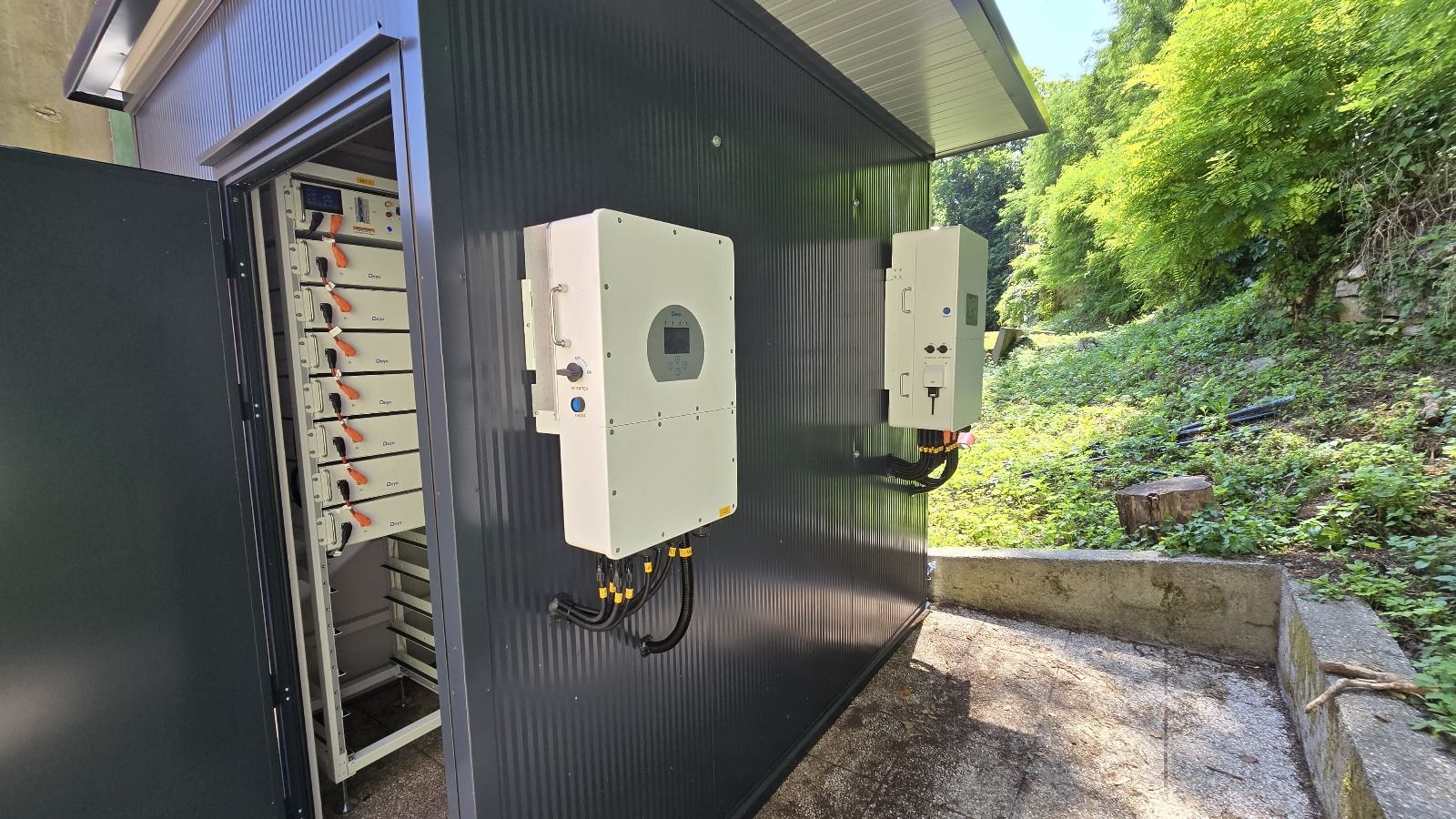
A battery energy storage system is a system of lithium iron phosphate (LFP) battery modules controlled by a battery management system (BMS) and connected to the grid and the solar power plant by a hybrid or battery inverter. During the day the storage system charges on surplus generated electrical energy, and in the evening and at night it returns the stored electrical energy to the loads. With time-based control it can also charge from the grid during the cheaper time blocks.
Two figures are key when choosing: the capacity (kWh) tells you how much electrical energy the storage system holds, and the power (kW) how quickly it can absorb or deliver it. We determine both parameters from your consumption profile.
Why include a battery energy storage system?
Higher self-sufficiency
You consume the surpluses of daytime generation in the evening and at night; the share of your own electrical energy typically rises from around 30% to 70%.
Shifting consumption between time blocks
The storage system charges during the cheaper time blocks and discharges during the more expensive ones, which reduces the cost of network charges and supplied electrical energy.
Peak shaving and lower billed capacity
Short-term peaks are covered by the storage system, so the company can operate with a lower contracted capacity and without penalties for exceedances.
Backup power
During a grid outage, the storage system automatically takes over the supply of selected loads: cooling systems, servers, lighting, heating.
Overcoming connection capacity and permit constraints
Where the connection capacity is limited or the approval for feeding into the grid has been refused, the storage system enables a larger solar power plant without feeding surpluses into the grid.
Readiness for the flexibility market
A controlled storage system can in the future participate in demand response and ancillary services and generate additional revenue; we design systems to be ready for this.
For whom does a battery energy storage system make sense?
For owners of existing solar power plants who want to keep surplus generated electrical energy on site.
For new solar power plants after the end of annual net metering, where a storage system is a precondition for high self-sufficiency and the highest grants.
For companies with pronounced consumption peaks that want to reduce their billed capacity and network-charge cost.
For buildings with limited connection capacity or a refused approval for connecting a solar power plant.
For everyone who needs reliable backup power for key loads during grid outages.
For investors interested in hybrid power plants, merchant generation and the future flexibility market.
Solutions for the home and for businesses
For the home
Residential battery energy storage systems with capacities from approximately 5 to 30 kWh are modular: you can start with a smaller capacity and expand it later. The system connects the solar power plant, the heat pump and the electric vehicle charging station into a whole, and you monitor operation in a mobile application.
For businesses and industry
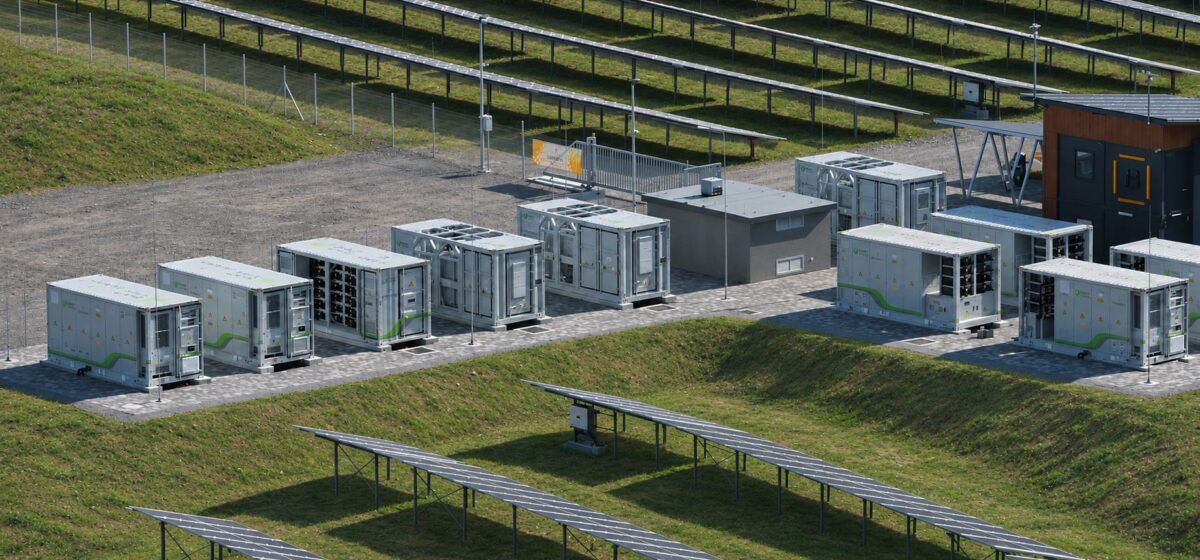
For business users we design systems from a few dozen kWh to industrial cabinet and container storage systems above 1,000 kWh. The design is based on an analysis of the 15-minute load profile and a simulation of the effects: we calculate the savings on network charges, billed capacity and supplied electrical energy, and estimate the payback period.
Battery energy storage systems
 01
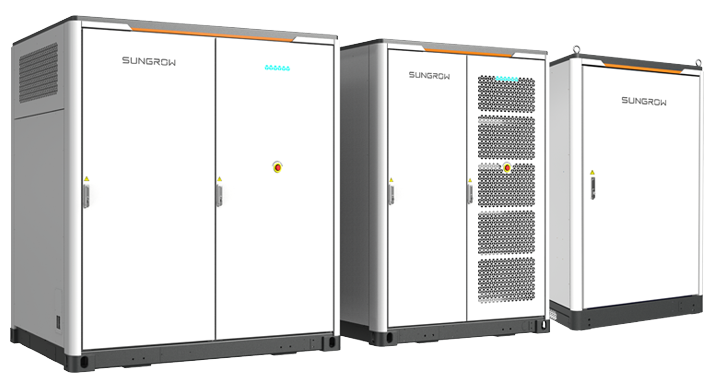
Sungrow battery energy storage systems
Sungrow is one of the world’s largest manufacturers of inverters and battery energy storage systems (Tier 1). JB energija is an official Sungrow service partner, so we have direct access to technical support, training and original spare parts – from residential systems to industrial solutions.
- Modular high-voltage LFP systems for the home with the option of gradually expanding the capacity.
- A complete ecosystem: hybrid inverter, storage system and the iSolarCloud application from a single manufacturer.
- Industrial cabinet and container systems with liquid cooling for peak shaving and merchant applications.
- Backup power for selected circuits during a grid outage.
- Official service partner: commissioning, warranty and service support.
 02
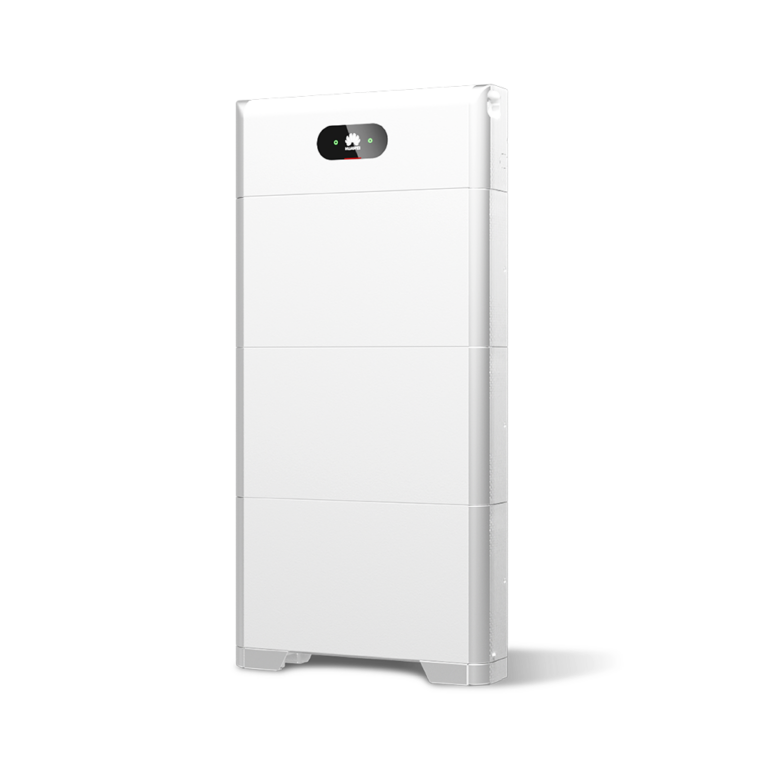
Huawei battery energy storage systems
Huawei LUNA2000 is one of the most widespread residential battery energy storage systems: modular, safe and optimised to work with Huawei SUN2000 inverters.
- Modular capacity expansion with 5 kWh modules,
- Safe lithium iron phosphate (LFP) technology with multi-level protections.
- Backup power in combination with a suitable inverter and a transfer switch module.
- Monitoring of generation, consumption and the storage system’s status in the FusionSolar application.
- Suitable for new builds and retrofit installation alongside existing Huawei systems.
 03
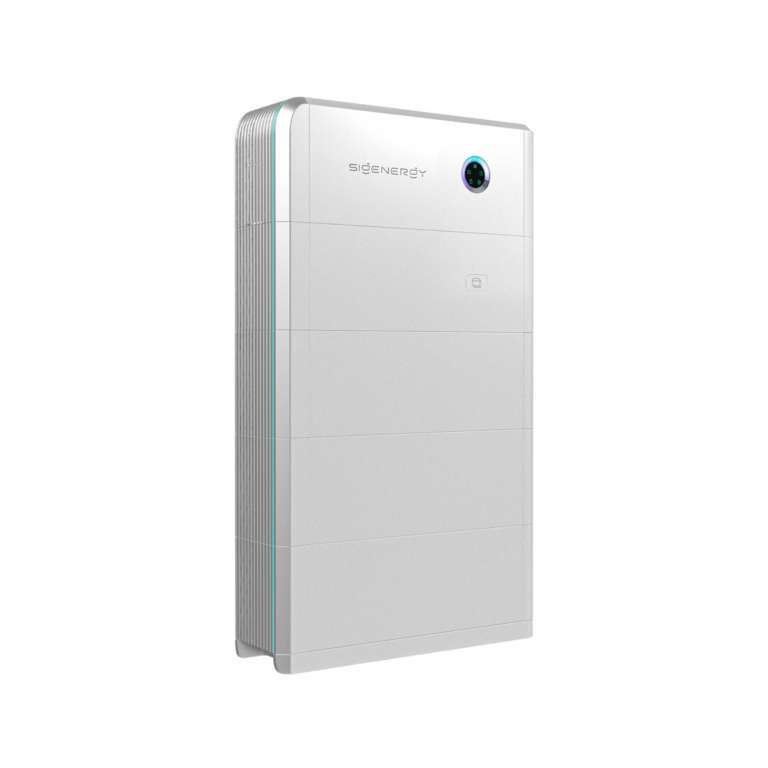
Sigenergy battery energy storage systems
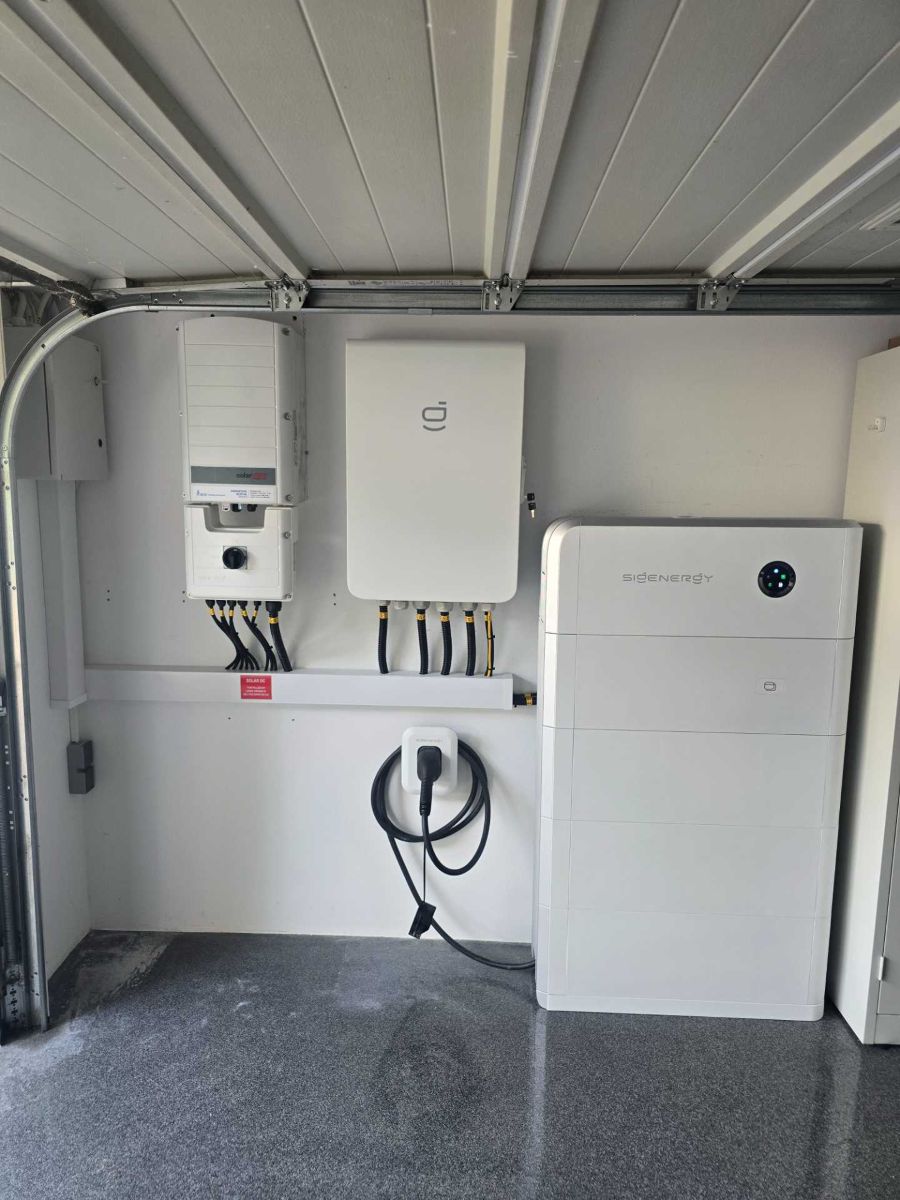
Sigenergy SigenStor is a modern integrated system that combines a hybrid inverter and battery modules in a single housing – fewer cables, faster installation and a tidy appearance.
- Integrated "all-in-one" design: the inverter and modules simply stack into a tower.
- Modular capacity expansion even after several years, without affecting the operation of the existing modules.
- Safe LFP technology with advanced management and protections.
- The option of expansion with a DC electric vehicle charging module.
- Smart management and monitoring via a mobile application.
How do we choose the right capacity?
For households we determine the capacity from the consumption profile and the solar power plant’s capacity; the final size is always confirmed by a calculation. For businesses we produce a simulation on the 15-minute load profile, which shows the effect of different capacities and power ratings on peaks, billed capacity and annual costs, so the investment is sized for return, not by gut feeling.
To a battery energy storage system in 7 steps
Analysis of the situation and consumption
We review the existing system, the bills and the electricity consumption profile (for businesses, the 15-minute data).
Simulation of the effects
Using our own tools, we simulate the savings at different capacities and prepare an economic calculation.
Selection and sizing
We choose the brand, capacity and power, check compatibility with the inverter and the installation location (ventilation, temperature, service access).
Documentation and grants
We prepare the technical documentation, arrange the procedures with the distribution system operator and a complete grant application.
Installation
Our own team carries out the installation, electrical connections and protections to professional standards.
Commissioning and control setup
We set the charging and discharging strategy (self-consumption, time blocks, peak shaving, backup power) and teach you how to use the application.
Monitoring and optimisation
We monitor operation and adjust the settings where necessary; for contract customers we perform regular inspections and provide remote support.
Grants for battery energy storage systems
Grants are currently the strongest reason to decide now:
Private individuals (Borzen)
EUR 675/kW for new self-supply solar power plants with a battery energy storage system (versus EUR 180/kW without one) and EUR 275/kWh for the retrofit installation of a storage system.
Legal entities
We check your eligibility, prepare a complete application and submit it for you.
Answers to frequently asked questions
Can I add a battery energy storage system to an existing solar power plant?
Yes. We first check the compatibility of the existing inverter; where a direct connection is not possible, we use an AC-coupled system with its own battery inverter. Retrofit installation is eligible for grants.
How do I choose the right storage capacity?
We determine the capacity from your consumption profile, the solar power plant’s capacity and your goal (self-sufficiency, time blocks, peak shaving). We prepare a simulation showing the effect of different capacities on your electricity bill and choose the one with the best ratio between investment and savings.
Will the system work during a grid power outage?
Yes, if backup power is included: during an outage the storage system automatically takes over the supply of selected circuits. Together we define which loads are essential, and the duration of the supply depends on the storage system’s capacity and their consumption.
Can I charge the storage system from the grid during the cheaper time blocks?
Yes. Time-based control enables charging during the cheaper blocks and discharging during the more expensive ones, which reduces the cost of network charges and supplied electrical energy even in months with less sunshine.
How does a storage system reduce a company’s costs?
On three levels: it increases the share of self-generated electrical energy, shifts consumption into cheaper time blocks and shaves peaks, allowing a lower contracted capacity.
What are the service life and warranty?
Quality LFP systems are designed for several thousand charging cycles, which in practice means 10 to 15 or more years of operation. Manufacturers’ warranties are usually 5 years or tied to the number of cycles or the remaining capacity, and are clearly stated in the quote.
Is a battery energy storage system safe?
Yes. We install exclusively systems with lithium iron phosphate (LFP) technology, which is considered the most thermally stable, with multi-level protections and the appropriate certificates. We choose the installation location according to the manufacturer’s instructions: a ventilated technical room or garage, or an outdoor version with the appropriate IP protection.
Do I need a permit or approval?
A building permit is not required for typical installations, and we arrange all the procedures with the distribution system operator and the adjustment of the electrical protections. We prepare the documentation.
Can I also earn money with a storage system?
As the flexibility market develops, controlled battery energy storage systems will be able to participate in demand response and ancillary services and generate additional revenue. We design systems to be ready for this; the possibilities depend on market developments and the size of the system.
What maintenance does it require?
Customers monitor the system via the application, and we recommend an annual inspection of the protections, connections and settings. For contract customers we monitor operation remotely and take action in the event of deviations.